
Dog Daycare Safety: What Every Veterinarian Wants You to Know Before You Go
Dog daycare is one of those topics that comes up constantly in veterinary conversations, sometimes in the context of keeping your dog active and socialized, and sometimes in the aftermath of a respiratory infection, a bite wound, or your dog coming home completely wiped out and limping. The facilities vary widely in quality, and the difference between a well-run daycare and a poorly managed one isn’t always obvious from a single visit. Knowing what questions to ask and what standards to expect helps you make a choice your dog will thank you for.
Creature Comforts Veterinary Service in Saylorsburg is an AAHA-accredited, 24/7 practice with a long-standing commitment to the pets and families of the Pocono region. We’re happy to discuss vaccine requirements and health prerequisites for daycare participation at any appointment, and our emergency care is available if something goes wrong at a daycare or boarding facility. For ongoing health maintenance and the vaccines daycare facilities require, contact our team to schedule.
What Makes a Dog Daycare Truly Safe and Good?
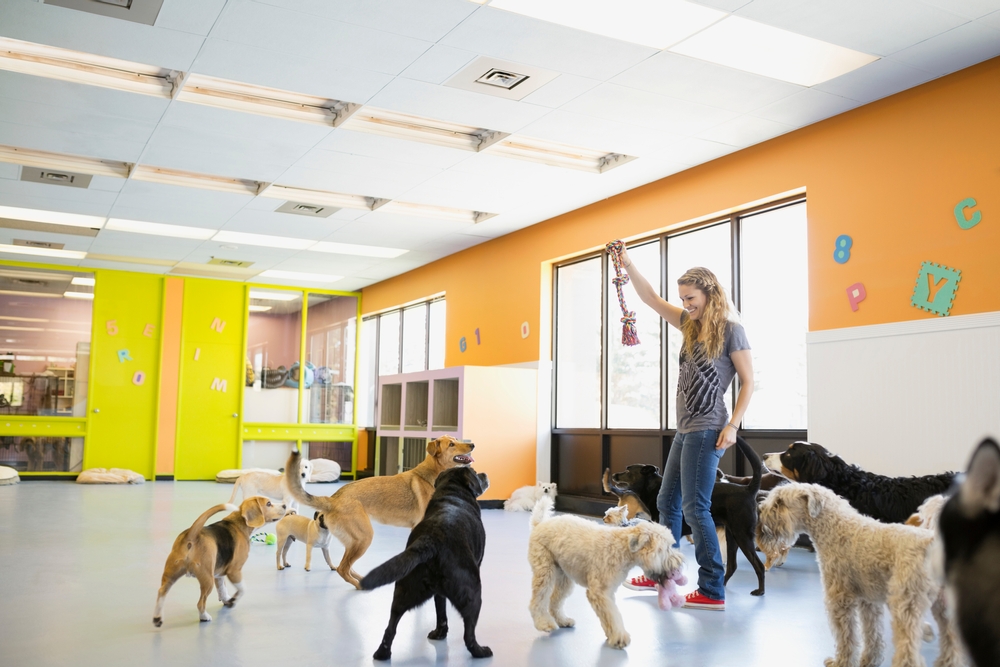
A quality daycare is built around safe play, structured rest, attentive supervision, thoughtful dog matching, quick response to stress signals, and clear communication with you. When done well, socializing your dog in a structured group setting builds confidence and helps them interact calmly with unfamiliar dogs and people throughout life.
Features that distinguish a strong facility include:
- Trained, experienced staff who can read dog body language and intervene before play escalates
- Reasonable staff-to-dog ratios (typically 1 staff member per 10 to 15 dogs)
- Thoughtful grouping by size, energy level, and play style rather than throwing all dogs together
- Scheduled rest periods away from group play
- Clear vaccine and health requirements that are actually enforced
- Proactive communication including incident reports when something happens.
Quality varies dramatically. A facility that sounds good on the website may have very different practices in the play yards. The questions you ask before your dog ever steps inside matter more than any marketing copy. Our wellness and preventative care visits are a good place to confirm vaccines, parasite prevention, and behavior readiness before any trial day.
Is Daycare Right for Every Dog?
Not every dog is a daycare candidate, and that’s perfectly fine. Tolerance for group settings varies enormously between dogs, and it can change as dogs age or develop physical or behavioral changes.
Signs your dog is a good fit: comes home tired but happy (not anxious or shut down), eats and drinks normally afterward, shows excitement on the way to the facility, plays well with other dogs in informal settings, and has good basic manners.
Signs that suggest daycare may not be the right fit: returns home stressed, fearful, or aggressive toward family members; loses appetite or has loose stools after attending; seems to dread drop-off even after multiple visits; has been involved in repeated conflicts despite good management; or develops new fearful or reactive behaviors after starting daycare.
Reading body language at pickup tells you a lot. A relaxed, mildly tired dog who eats dinner and sleeps well had a good day.
Why Can Daycare Be Safer Than Dog Parks?
Many people assume dog parks and daycare offer similar experiences. They don’t. The differences come down to screening, supervision, and accountability.
A quality daycare requires current vaccines and health documentation for every attending dog, screens for behavioral compatibility before your dog joins regular sessions, has trained staff actively watching and intervening, groups dogs by size and play style, maintains records of any incidents, and is liable if something goes wrong on premises.
A public dog park has none of those protections. Any dog can show up, vaccinated or not, friendly or not, healthy or not. People may not be paying attention. The dog park risks are real, particularly for small dogs, young puppies, senior dogs, and dogs with medical concerns.
That doesn’t mean dog parks never work. For confident, well-socialized adult dogs in regular use during quiet hours, they can be fine. But the structured environment of a quality daycare is genuinely safer for most dogs.
When Can a Puppy Start Daycare?
Puppies should not enter general daycare until their core vaccination series is complete (typically around 16 weeks of age). Their immune systems are still developing, and group environments carry significant disease risk before vaccines take full effect.
Some daycares offer dedicated puppy groups with stricter health requirements, which may be appropriate further along in the vaccine series. Ask about specific protocols.
Puppy Classes vs. Daycare vs. Dog Parks for Socialization
Here’s where many people get confused. The critical puppy socialization window closes around 12 to 14 weeks, well before the vaccine series is complete. Waiting until full vaccination means missing the most important developmental period for shaping social behavior. The current consensus on early socialization recommends balancing infectious disease risk with the long-term behavioral risk of inadequate socialization.
Once your puppy completes their vaccine series and has positive experiences in a puppy class, they’re typically ready for a quality daycare with a careful trial introduction.
What Should You Look for on a Daycare Tour?
A good tour goes beyond the cheerful front office. The goal isn’t to find a facility where conflict never happens (no group setting is conflict-free); it’s to find one that prevents problems early and responds appropriately when they do come up.
Safe group play looks like loose, bouncy body language with frequent role changes during play; self-handicapping (larger dogs adjusting to play with smaller ones); pauses where dogs disengage and reset; multiple dogs choosing to be near each other; and staff present and actively reading the group.
Good introductions and management mean new dogs introduced gradually rather than dropped into the middle of an established group, separate areas for rest and quieter dogs, visible cleaning supplies and clear hygiene protocols, and calm, attentive staff who address developing situations early.
Red flags to take seriously: excessive barking or visibly stressed dogs throughout the space, dogs piled in small areas without rest options, staff distracted or absent from the play yards, no interest in your dog’s vaccine records or temperament, reluctance to give a tour, or strong urine or fecal odors suggesting cleaning gaps.
Vaccines and Parasite Prevention for Daycare
Most quality facilities require:
- Rabies (legally required)
- DAPP/DHPP (distemper, adenovirus, parvovirus, parainfluenza)
- Bordetella (kennel cough), often required every 6 to 12 months
- Canine influenza (H3N2 and H3N8 strains), increasingly required
- Leptospirosis, depending on regional risk
The Northeast, including the Poconos, has meaningful leptospirosis exposure, particularly with wildlife and water sources around shared outdoor spaces. We typically recommend it for daycare and boarding dogs in our area.
Routine fecal testing helps identify intestinal parasites that group settings can amplify. Even dogs with normal-looking stools can shed parasites that infect other dogs. Year-round flea and tick prevention and heartworm prevention are essential, not optional, for daycare dogs.
Most facilities require a 24- to 48-hour symptom-free period before returning after illness. Don’t try to push through. Your dog returning too soon to daycare after coughing or GI symptoms can spread illness throughout the group.
Contagious Diseases That Spread in Daycare Settings
Group settings increase exposure to contagious diseases despite good cleaning protocols. Knowing what to watch for helps you act quickly when something develops.
- Parvovirus: Severe gastrointestinal illness primarily affecting unvaccinated puppies. Highly contagious through fecal-oral spread; survives in the environment for months.
- Leptospirosis: Bacterial infection spread through contaminated water and wildlife urine; can cause kidney and liver failure. Vaccine prevents most strains.
- Oral papilloma virus: Causes warts in and around the mouth, mostly in young dogs. Spreads through direct contact during play.
- Kennel cough: Respiratory infection caused by various bacteria and viruses. Spreads through coughing and shared surfaces. Bordetella vaccine reduces severity but doesn’t prevent all cases.
- Canine influenza: Highly contagious respiratory virus. Can be severe in some dogs. Vaccination is increasingly important in group settings.
If your dog develops a cough, lethargy, fever, vomiting, or diarrhea after daycare, our diagnostics can identify the cause quickly. Early evaluation matters more for some of these diseases than others.
Parasites and Skin Issues to Watch for After Daycare
Shared yards and close contact increase the risk of parasites and skin problems beyond the respiratory and GI illnesses above:
- Giardia: A protozoal parasite spread through contaminated water and feces. Causes intermittent diarrhea that may look mild but is reliably contagious. Routine fecal testing catches it.
- Ringworm: A fungal infection (not actually a worm) causing circular bald patches with redness. Highly contagious between pets and to humans.
- Sarcoptic mange: Microscopic mites causing intense itching and crusted skin. Spreads readily through direct contact.
Watch for excessive scratching, hair loss, skin redness, or stool changes after daycare attendance. We can update parasite protection and evaluate any skin or GI symptoms as they come up.
Checking for Injuries After Daycare Pickup
Even well-managed daycares produce occasional minor bumps and scrapes. A quick check after every pickup catches issues early:
- Minor scrapes and abrasions can usually be cleaned with diluted chlorhexidine or saline at home and monitored. Watch for swelling or discharge.
- Eye irritation or conjunctivitis after daycare may be irritation from rough play, foreign material, or infection. Persistent squinting or discharge warrants evaluation.
- Bite wounds deserve special attention even when they look minor. Puncture wounds from teeth often look small on the surface but introduce bacteria deep into the tissue, leading to infections that develop over 24 to 72 hours. Most bite wounds need professional cleaning and often antibiotics. Don’t assume a small puncture will heal on its own.
For wound care that requires more than home cleaning, our surgery team handles wound repair, debridement, and abscess management when needed. We’re available 24/7 for any emergency needs you may have- just call us.
Preparing Your Dog for Daycare
Trial Sessions and Honest Communication
The best daycare transitions happen gradually. A successful approach often looks like:
- A 2- to 4-hour trial day to assess fit and stress level
- A first half-day session shortly after, with feedback from staff
- Full days starting only once your dog has demonstrated comfort
Be honest with daycare staff about everything: medication schedules, anxiety triggers, physical limitations, history of resource guarding, fear of certain types of dogs, recent surgical history, prior incidents at other facilities. Information protects your dog. Withholding it makes problems more likely.
Frequently Asked Questions About Dog Daycare Safety
How often is too often for daycare?
Most dogs do well with 1 to 3 days per week. Daily attendance for some dogs is fine, but watch for signs of cumulative stress. Your dog, if perpetually exhausted, edgy, or developing new behavioral issues, may be overdoing it.
My dog seems fine but the staff says he’s anxious. Who’s right?
Likely both. Some dogs have no stress at home but show it in group settings. Trust the staff observations and consider whether a different facility, fewer days, or a switch to boarding might suit your dog better.
Can my senior dog still go to daycare?
Maybe. Some seniors continue to enjoy daycare if their physical comfort and stamina support it. Others do better with quieter alternatives. Our AAHA\-accredited team can help you assess whether daycare is still appropriate.
What if my dog gets injured at daycare?
For minor scrapes, you can usually clean and monitor at home. For bite wounds, swelling, lameness, or wounds that seem deeper than they look, call us. Eye injuries warrant prompt evaluation regardless of how minor they seem.
Do all daycares require the same vaccines?
No. Requirements vary, particularly for canine influenza and leptospirosis. Confirm specifics with each facility and let us know what they require so we can build the right protocol.
Partnering With Your Vet for Daycare Decisions
A strong daycare protects your dog’s health, supervises play thoughtfully, requires appropriate vaccines, and treats rest as seriously as activity. Choosing one is an active process, not a click-and-enroll decision. The questions you ask up front, the trial period you insist on, and the honest communication you maintain afterward all shape whether daycare becomes a positive part of your dog’s life or a source of problems.
If you’re getting ready to start daycare, transitioning between facilities, or wondering whether daycare is still working for your dog, our team is glad to help. Schedule an appointment to update vaccines, complete pre-daycare documentation, or talk through whether daycare or boarding is the better fit for your dog right now.






Leave A Comment