

Collapsed Trachea in Small Dogs: Signs, Diagnosis, and Treatment Options
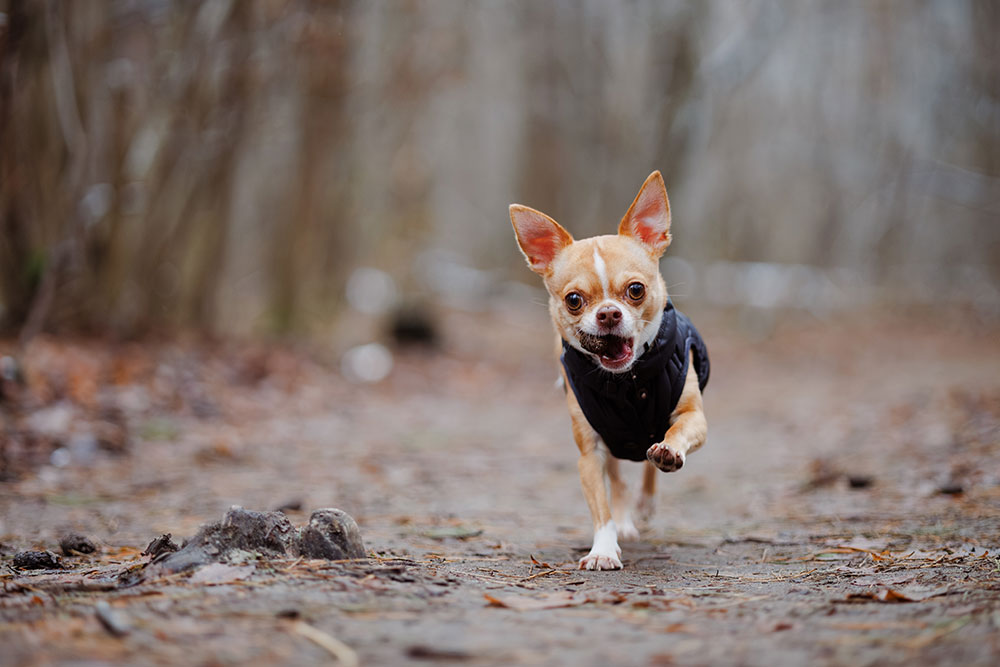
The sound is hard to forget once you have heard it: a honking, goose-like cough that seems to come out of nowhere, often worse with excitement, exertion, or a tug on the leash. Collapsed trachea is one of the most common respiratory conditions in small and toy breeds, caused by a weakening of the cartilage rings that keep the airway open. Mild cases can be managed medically for years, but more severe presentations significantly affect quality of life and require a more aggressive treatment approach. The grade of collapse, the triggers, and the available options are what determine whether a pet is constantly symptomatic or can actually enjoy a walk again.
Creature Comforts Veterinary Service in Saylorsburg, PA is an AAHA-accredited practice with 24/7 emergency availability and the diagnostic and surgical depth to evaluate and manage tracheal collapse across all presentations. Our diagnostics include digital radiography for airway assessment, and our experience with complex respiratory cases means owners get clear, realistic guidance on what management looks like long term. Contact us to have a coughing small dog properly evaluated, and together we’ll create a plan to help you navigate this life-long condition.
That Honking Cough: Could It Be Collapsed Trachea?
It often starts as something easy to dismiss: a brief coughing fit when your Yorkshire Terrier gets excited about a visitor, or a few goose-like honks when your Pomeranian pulls toward a squirrel. Then it starts happening more often, or more intensely, or you notice your dog seems to tire out faster than they used to. That progression is a familiar pattern with tracheal collapse, and it is worth taking seriously before it advances.
The trachea is the windpipe, the tube that carries air from the throat into the lungs. It is supported by a series of C-shaped cartilage rings that keep it open during breathing. In tracheal collapse, those cartilage rings weaken and lose their rigidity, allowing the tracheal walls to flatten or buckle inward during inhalation or exhalation. The result is a narrowed airway that has to work harder to move the same volume of air, producing the characteristic honking cough.
This is a progressive condition, and while genetics play a central role, chronic coughing from other causes, obesity, and repeated pressure on the neck from collar use can all contribute to cartilage deterioration over time. Our wellness and preventive care visits for small breed dogs include discussion of these modifiable risk factors so owners can take practical steps before symptoms develop or worsen.
Which Dogs Are Most Likely to Develop This Condition?
Small and toy breeds carry a genetic predisposition to tracheal collapse because of their small body size, fine bone structure, and how their cartilage is composed. Breeds most frequently affected include:
- Yorkshire Terriers (probably the most commonly diagnosed breed)
- Pomeranians and Chihuahuas
- Toy and Miniature Poodles
- Maltese and Shih Tzus
- Pugs and other flat-faced breeds, who may have overlapping airway problems
For flat-faced dogs, brachycephalic airway syndrome can compound the problem, since narrowed nostrils, an elongated soft palate, and other structural features create additional resistance that puts more strain on the trachea with every breath.
Risk factors that are more controllable include obesity, collar use that puts direct pressure on the tracheal area, exposure to smoke and airborne irritants, and poorly managed chronic respiratory infections. Working with our team to address these factors, particularly weight management, is a meaningful part of long-term care.
Recognizing the Signs: What Collapsed Trachea Looks and Sounds Like
The cough itself is distinctive enough that experienced owners and veterinarians often recognize it immediately. It has a dry, harsh, honking quality, sometimes described as sounding like a Canada goose, and it tends to be triggered by specific situations rather than occurring constantly throughout the day.
Common triggers include:
- Excitement, particularly greetings or anticipating walks
- Exertion, even mild activity like climbing stairs
- Eating or drinking quickly, especially drinking
- Heat and humidity
- Pressure on the neck from a collar or pulling on the leash
- Stress or anxiety
Beyond the cough, other signs include visible increased respiratory effort, a subtle extension of the neck during breathing, exercise intolerance, and intermittent gagging or retching, especially after drinking water. As the condition progresses, episodes may occur more frequently, last longer, and happen with less provocation. Some dogs develop a persistent wheeze or noisy breathing between coughing episodes. If you are noticing any of these signs, please do not wait to see if it resolves on its own. Request an appointment so we can evaluate what is happening and get ahead of it.
When Is Collapsed Trachea an Emergency?
There is a meaningful difference between the chronic, manageable cough of a dog with mild tracheal collapse and an acute respiratory crisis, and knowing that difference could save your dog’s life.
Signs that require immediate emergency care:
- Significant difficulty breathing at rest, not just during activity
- Cyanosis: blue, purple, or white-gray gum color, which indicates dangerously low oxygen levels
- Open-mouth breathing in a dog who is not panting normally
- Collapse or inability to stand
- Extreme panic or distress that does not settle with rest
These are pet emergency signs that should send you straight to an emergency facility without delay. We provide 24/7 emergency care and are equipped to stabilize a dog in respiratory distress with oxygen support, sedation to reduce panic-driven oxygen demand, and medications to open and calm the airway. Call ahead at (570) 992-0400 so we can prepare for your arrival.
How Is Collapsed Trachea Diagnosed?
Getting to a confirmed diagnosis and understanding the severity of collapse requires more than a physical examination, though that is always the starting point. In a dog with tracheal collapse, gentle palpation of the trachea along the neck often triggers a coughing episode, and abnormal respiratory sounds are usually audible with a stethoscope.
From there, imaging provides the objective picture:
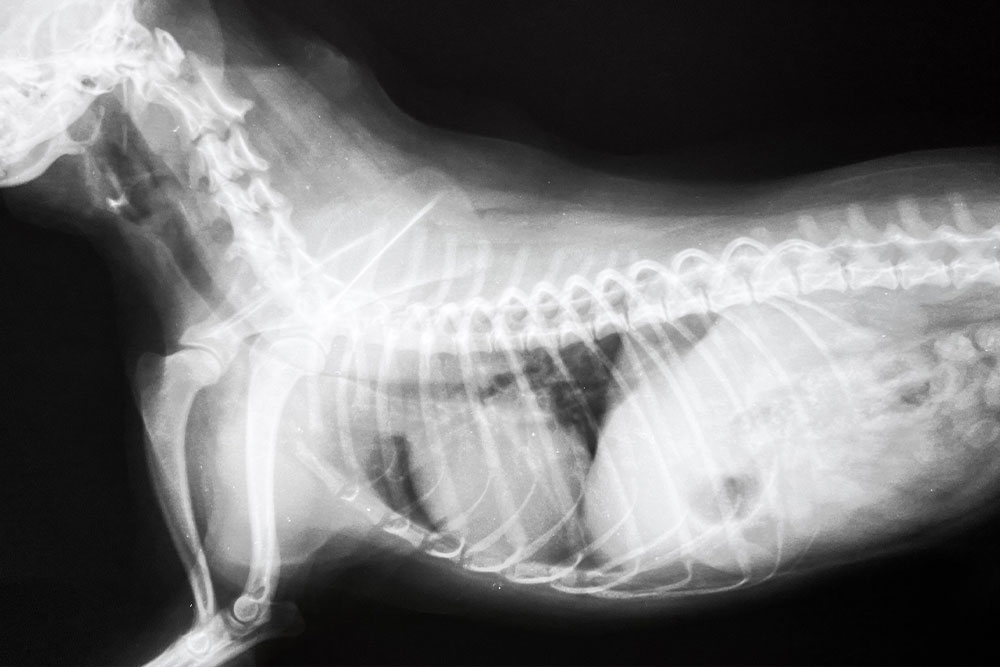
- Radiographs (X-rays) taken during both inhalation and exhalation can reveal narrowing of the tracheal lumen (the hollow, tubular inner cavity of the windpipe) at different phases of the breathing cycle. A cervical collapse (in the neck) tends to be most visible on inspiration, while a thoracic collapse (in the chest) is more apparent on expiration.
For most pets, a physical exam and x-rays are enough to get a proper diagnosis. For cases that aren’t straightforward or for pet owners that want to pursue surgery to fix tracheal collapse, we may recommend:
- Fluoroscopy, a real-time moving X-ray, is the gold standard for visualizing dynamic collapse as it actually happens during breathing. This is not available at every practice but significantly improves diagnostic accuracy.
- Bronchoscopy, a direct visual examination of the airway under anesthesia, allows for precise grading of severity and rules out other conditions like chronic bronchitis or masses.
Collapse is typically graded on a scale from Grade 1 (mild, about 25% reduction in tracheal lumen) to Grade 4 (near-complete collapse). That grade, along with the dog’s clinical symptoms, guides the treatment approach. Our team is experienced in respiratory assessment and will recommend the appropriate diagnostics for each patient’s presentation.
Medical Management: The First Line of Treatment
For most dogs with Grade 1 to 3 collapse and manageable symptoms, medical management is the foundation of treatment. The goal is to reduce the frequency and severity of coughing episodes, control airway inflammation, and address any other factors that might be contributing to the symptoms.
Standard medical approaches include:
- Cough suppressants (such as butorphanol or hydrocodone) to break the irritation cycle, since coughing itself damages and inflames the airway
- Corticosteroids or anti-inflammatories to reduce airway swelling, typically used short-term during flares
- Bronchodilators such as theophylline or terbutaline to help relax and open the airway
- Antibiotics if secondary bacterial infection is present or suspected
- Sedatives for anxious dogs whose excitement and panic worsen episodes
Alternative Medicine:
- Studies have shown that acupuncture improves symptoms of tracheal collapse. We offer alternative medicine options including acupuncture and laser therapy, which can help dogs with chronic airway disease as part of a broader management approach.
Our team works with pet owners through wellness and preventive care visits to build a realistic, sustainable management plan and adjust it as your dog’s needs change over time.
When Medical Management Isn’t Enough: Surgical Options
Dogs with Grade 4 collapse, or those with severe symptoms that are not responding to medication and lifestyle changes, may be candidates for surgical intervention. The primary procedure used is intraluminal tracheal stenting, in which a self-expanding metal stent is placed inside the trachea to hold the walls open and restore airflow.
The decision between medical management versus placing stents is not straightforward. Stenting is a specialized procedure that requires advanced equipment and expertise, is typically performed by a specialist, and carries real risks including stent migration, fracture over time, mucus accumulation, and granulation tissue formation around the stent ends. It is not a cure, and many stented dogs still require some ongoing medical management.
What it does provide for the right candidate is a meaningful improvement in airflow and quality of life, often allowing dogs who were struggling significantly to breathe more comfortably and tolerate activity again. Our team can help families understand whether a referral to a specialist for stent evaluation is appropriate and guide the decision with honest, realistic information about expected outcomes.
How Can Pet Owners Reduce Symptoms of Tracheal Collapse at Home?
Lifestyle modifications that reduce strain on the trachea every day are equally as important as medical treatment. Managing a dog with tracheal collapse becomes second nature fairly quickly once you know the triggers. Here is what makes the biggest difference day to day:
Equipment:
- Always use a well-fitted harness, never a collar. This is non-negotiable.
- Consider a front-clip harness if your dog pulls, since it redirects steering to the chest rather than the neck.
Environment:
- Keep the home smoke-free and minimize use of aerosol sprays, scented candles, and harsh cleaning products
- Use a humidifier during dry months, particularly winter in Pennsylvania
- Keep your dog cool in summer heat; heat and humidity significantly worsen respiratory effort
Exercise:
- Shorter, more frequent walks work better than long ones
- Avoid high-intensity play like fetch or running on hot days
- Watch for early signs of overexertion: increased respiratory rate, open-mouth breathing, reluctance to keep moving
Monitoring:
- Note what triggers coughing episodes and how long they last
- Track whether frequency is increasing over time
- Have a clear plan for when symptoms cross into emergency territory, including our emergency number (570) 992-0400 saved in your phone
Building a consistent communication loop with our team is one of the most useful things an owner can do. When you know what is normal for your dog and can describe changes clearly, adjustments to the treatment plan happen faster and more effectively.
Long-Term Prognosis: What to Expect Over Time
Tracheal collapse is a progressive condition, and it is important to go into management with realistic expectations. The cartilage does not regenerate, and the structural changes are permanent. That said, many dogs live comfortably their entire lives with appropriate management, and quality of life with well-controlled collapsed trachea can be genuinely good.
The factors that most influence long-term outlook include:
- The grade of collapse at diagnosis, with milder cases having more runway
- Whether the dog is at a healthy weight and stays there
- How consistently management is maintained, including medication compliance and lifestyle adjustments
- How quickly flare-ups are recognized and addressed before they escalate
- Whether concurrent respiratory conditions like chronic bronchitis are also being managed
Owner vigilance is genuinely one of the most important factors. Dogs with proactive owners who monitor them closely and reach out before things are in crisis tend to do better compared to those who have problems pile up before they are addressed. Our team is here for those regular check-ins and to adjust the management plan as your dog ages and the condition evolves.
FAQ: Collapsed Trachea in Small Dogs
Is the honking cough always collapsed trachea?
Not necessarily. Kennel cough, chronic bronchitis, heart disease, and other airway conditions can produce similar sounds. The honking, goose-like quality is characteristic of tracheal collapse, but a proper diagnosis with imaging is important before starting treatment for any specific condition.
Can collapsed trachea be cured?
Not reversed, no. The structural cartilage changes are permanent. Management controls symptoms and slows progression, and surgical stenting can improve airflow in severe cases, but no treatment restores the trachea to normal. That said, “managed” can mean a very comfortable, active life for many years.
Should I stop walking my dog if they have collapsed trachea?
Not entirely, but activity needs to be adapted. Short, calm walks with a harness on cool days are generally well tolerated. High-intensity exercise, hot weather, and situations that cause excitement or stress are the more significant concerns.
Is this condition genetic? Should I be concerned about littermates?
Yes, there is a strong genetic component, particularly in predisposed toy breeds. Littermates and close relatives of affected dogs have elevated risk. This is worth discussing with your breeder and mentioning to your veterinarian for monitoring.
My dog has been coughing for months and seems fine otherwise. Is it still worth getting evaluated?
Yes. Tracheal collapse is progressive, and early diagnosis allows for earlier intervention before symptoms significantly affect quality of life. It also rules out other conditions that could be worsening quietly. Contact us and let us take a look.
Breathing Easier Together
Tracheal collapse is one of those conditions that sounds alarming when you first hear the diagnosis but becomes much more manageable once you understand it. With the right combination of medication, lifestyle adjustments, and consistent monitoring, most small dogs with this condition live comfortably and happily for many years.
We approach every case with the individualized attention it deserves, from the initial diagnostic workup through long-term management and any advanced interventions that become necessary. As an AAHA-accredited practice with 24/7 availability, we are here for the routine check-ins and the unexpected crises alike. Reach out at (570) 992-0400 to have your dog evaluated and get a clear picture of where things stand.

Leave A Comment